Tuesday, 27 March 2007

Haiku: I am the Blue Screen of Death

Windows NT crashed
I am the Blue Screen of Death
No one hears your screams


Peter Rothman

Sunday, 4 March 2007

Walking on Water: Poems by David Green

Today I present an interview with acclaimed British poet David Green and his new poetry collection 'Walking on Water'. Green, who originates from Nottingham in England, is an acclaimed, and published (South, About Larkin magazines amongst others) prize winning poet (Winner - 2006 Ottakars Portsmouth Poetry Competition). Walking on Water (December 2006) is his seventh published collection of poems since 1991 and is a reflective, intelligent and occasionally melancholic offering.

Distilled with, as one commentator puts it, a "sense of raw vulnerability that comes from unremitting disbelief, a relentlessly scouring scepticism", Green's poems are an obviously literate and stimulating synthesis of deep thought, everyday observations which utilise a variety of conventional and abstract techniques and perspectives to explore across twelve poems, within a variety of contexts, diverse themes as time, change, history, nature, places, materialism, relationships, love and notions of authenticity in art, performance and experience. The Ottakars' prize winning 'The Cathedrals of Liverpool' notably encapsulates many of these themes in one poem:

"That New Year's day eventually
the drizzle changed to rain and back
and just in time we came across
Scott's protestant cathedral
-a vault of air that broods upon
its sinfulness, the height of bricks
too distant for the camera flash
to properly illuminate
which picked out only you..."

Unrequited love is a particularly distinct and sensitive theme within the collection featuring in the reflective 'Anagram':

"The might-be’s and might-not-be’s zoomed about –
You must have been thinking of someone else
But, then again, your small, soft tender mouth
Has said as much. There are too many vowels,
Aren’t there, in I love you?"


and 'Sometime Gone’, inspired by James Fenton's Out of Danger.

Fenton's
"Out of danger from the wind,
Out of danger from the wave,
Out of danger from the heart
Falling, falling out of love."
inspires:

"never mine to to say forever
never mine to watch asleep
never mine to share year's ends with,
never mine to keep."


In my favourite poem from the collection 'Piccadilly Dusk', originally published in About Larkin magazine, Green articulates with considerable insight the authentically inauthentic deceptive, superficial and empty character behind the expensive and famous facades of ultra upmarket central London that have yet to be turned into an armed barricade.

"Fake is sometimes more expensive than real
What looks like more important than what is.
The spray of golden light on each hotel
is international, rented, nobody's.

No nightingale ever sang in this square
in any of the languages you know
Nobody is at home here, it's nowhere
and here it's permanently time to go"


Recently David kindly found the time for a brief interview to discuss Walking on Water, his poetry and influences:

How would you describe your collection ‘Walking on Water’ in one sentence?
It’s relaxed and confident.

Why did you choose the poem ‘Walking on Water’ as the title for your latest collection?
It’s the best title for a collection of all the poems in it. But it also probably refers to the confidence and perhaps, at a push, refers to the thing that poetry at its best can do with language. Like doing the seemingly impossible, although you can see how it’s done if you look closer.

If you could recommend somebody to read just one poem in ‘Walking on Water’ which one would it be and why?
It’s such a short book (and likely to be criticised for that) that it wouldn’t take very long to read it all. But I wonder if ‘Piccadilly Dusk’ is somehow the best thing in it. I hope it translates the moment into something the reader can share and I think it is a well-made thing. I was lucky to have the word ‘expatriate’ waiting in the back of my mind, ready for use, and it fitted in nicely here.

Notions of nature, weather and the seasons are well represented in ‘Walking on Water’ do you have any particular environmental and ecological views?
I remember someone who read ‘Museum’ in 1991 remarking that there was a lot of weather in it. I don’t do it consciously- perhaps it’s an English obsession. Perhaps being a bicycle rider, I’m always looking at the weather with a view to my next ride. Or perhaps the weather and the seasons are moods, easy and useful ‘objective correlatives’, in Eliot’s famous phrase. I think the planet- and our lives on it- has probably been damaged beyond repair already but it’s not meant to be a theme in my poems.

When did you become interested in, and start writing, poetry?
Creative writing was always an easy option at school from the earliest age. I can’t really remember not being interested in words but it wouldn’t have been until I was 14 or 15 that I deliberately set out to write poems. It’s hard to say when, or if ever, I wrote my first successful poem. I began ‘Re-read’, the selected poems, with Ferdinand, which I wrote when I was about 18 but the poems I had in the school magazine for a few years before that were okay for a teenager. I still haven’t written my essay on how ‘ poet is the easiest job in the world’.

Who would you cite as your most significant influences in poetry?
Thom Gunn was the poet who made me want to be a poet in the same way that George Best made me want to be a footballer. After that, the example of Philip Larkin. And after him, many of them. Once I could have pointed out lines here and there where my poems echoed Hardy, Auden or several others but I’ve gradually forgotten where the bodies are buried. ‘Sometime Gone’ in Walking on Water is deliberately homage to James Fenton’s poem ‘Out of Danger’. But I don’t think about other poets in those terms so much now, or try not to.

I understand some readers in the past have been slightly critical of your cerebral approach and technique, contending that you don’t write enough for the ‘common man’ (whatever one of them may be). How do you respond to this accusation?
I know that Martin Stannard wrote in PQR that my Tycho Brahe poems read like ‘biography by numbers’ and that he suggested I wrote too many poems about other works of art. Giles Darvill wrote a review of ‘Re-read’ in South magazine that said the effect was of ‘human feeling and energy packed into the discipline of a silicon chip’. The Darvill was a much more positive review than the Stannard but I don’t see either accusing me of being overly cerebral. If one wants ‘cerebral’ poetry one goes to Prynne, Basil Bunting, Ezra Pound and those who attend the conferences at Cambridge. I’m with Larkin, Edward Thomas and those who would like to be accessible at a first reading, although I’d like to think that one reading is not all that it would take to enjoy a poem properly.

What advice, if any, would you give to any poets, aspiring or otherwise?
You have to enjoy it for its own sake. It certainly doesn’t do any harm to read lots of different poets. But there’s no money in it and it’s a cliquey, small industry so it’s best not to make any plans for a career in it.

Aside from winning the Ottakars (Now Waterstones) Portsmouth Poetry Competition for the second consecutive year, do you have any further poetical plans or ambitions?
Not really. I’ve got a new poem ready for the competition in the hope that there is one this year and, of course, one could always use the £500 national prize rather than just winning in Portsmouth. I’m never sure where the next poem is coming from.
David Green and David Green Books can be found here

Wednesday, 23 August 2006

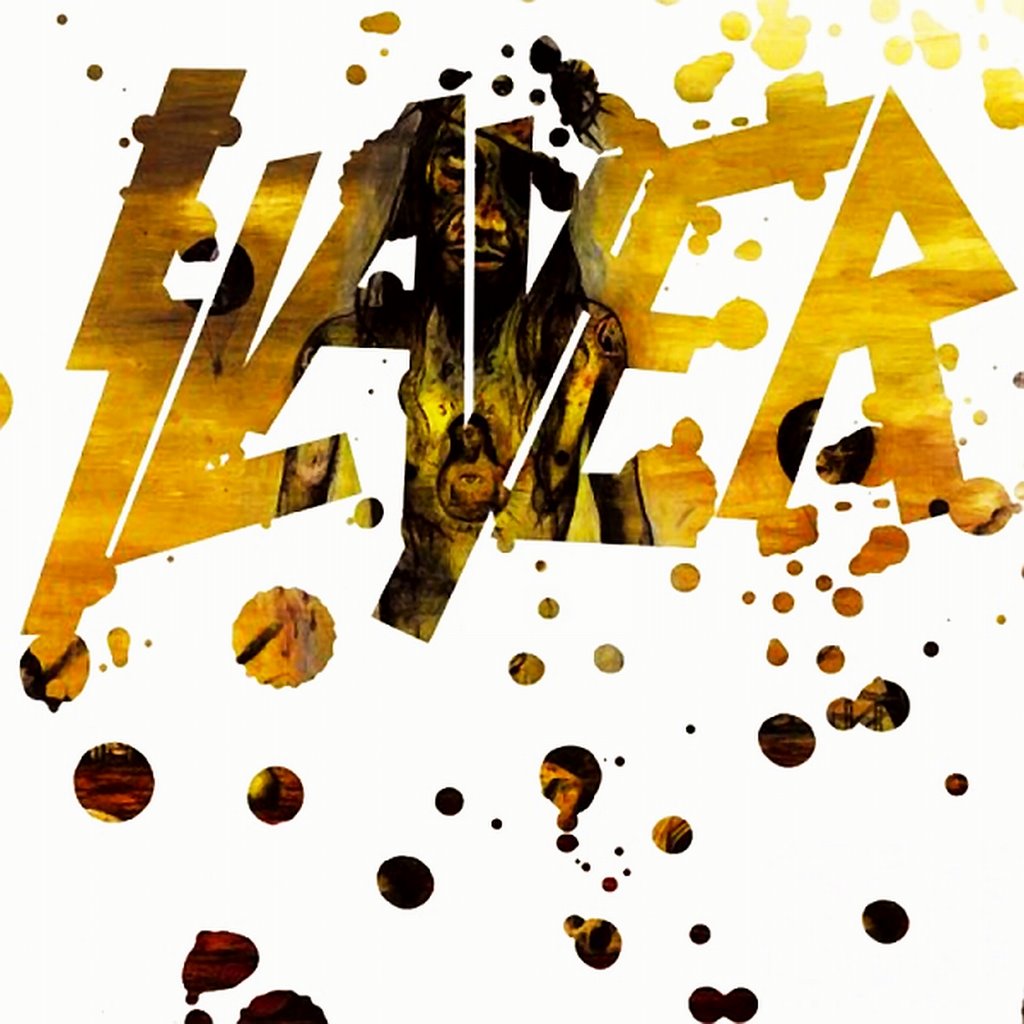
Review: Christ Illusion by Slayer

In an attempt to feature some more 'contemporary' music on this site I recently picked up the new, and ninth, album from my old teenage thrash favourites - Slayer - with the heartwarming title 'Christ Illusion'. The uncompromising attitude and commitment to loud, fast, aggressive and brutal remains unchanged as ever. A massive strength, but equally something of an Achilles heel. In the olden days Slayer wrote very fast and brutal songs on such cheery topics as serial killers, war, lobotomies, Nazi war criminals, Necrophilia, and Satan. Nowadays Slayer still write songs about serial killers, war, lobotomies, Nazi war criminals et al - they just play them a bit slower, and since the underrated Diablous In Musica with a faintly disturbing nu-metal inference. Significantly, since 2001's God Hates Us All it would something of an understatement to say that they, or moreover guitarist Kerry King, have developed a distinctly subtle dislike for Religion and in particular Christianity. With the new offering's title Christ Illusion there are few surprises about what your going to get. Except, perhaps, for how disappointing the overall effort is.

Listening to 'Christ Illusion' a couple of times I was really struck by how Slayer have done this all faster, better and more imaginatively before in their albums up to the relatively underrated Divine Intervention. Since 'Intervention', Kerry King's rise to songwriting prominence, with its cheesy nu-metalish moments, seems to have turned Slayer into a self conscious soapbox for a fruity form of Theophobia which gets riper with each subsequent release. The song 'Catalyst' is a fine example of this as King justifies his nutty extreme standpoint whilst chucking a few 'Hail Satans' into the mix. Its the magical kind of song that sounds as if its specially written for some meathead American wrestler. For all I know it could be.

Perhaps, the others realising that the very best Slayer is long behind them, just simply let Kerry get on his soapbox. Jeff Hanneman, the most active songwriter on all the classic albums, definitely seems to be disinterested playing virtually the same guitar solo in every song since 'Diabolus'. Unfortunately, the main problem with King's songs and lyrics aside from their nutty and silly content is that they slow the music down as Tom Araya trys to sing or better still 'elucidate' them, at times William Shatner style as he does in the intro to 'Eyes of the Insane'. I would also like to think that somebody in Slayer has a sense of humour when a bleak song 'Jihad' from the perspective of Islamic terrorists wanting to blow themselves up ends with a fading and repeated "Hail Satan". The frequency of these "Hail Satans" inanely peppered amongst the album's lyrics though rather fatigueing, but nonetheless amusing, might indicate somebody in the band has a sense of humour.

Lyrics, if you can call them that, have never been a massive Slayer strongpoint. But by God, the lyrics in the unholy trinity of Slayer albums Reign in Blood, South of Heaven and Seasons in the Abyss had far more fantasy and imagination than the crazily self conscious, cod satanic ranting of Slayer/Kerry King circa 2006. This is not to say there isn't some success on the album. I do like the faster tracks such as 'Supremist', 'Skeleton Christ', 'Cult', 'Consfearacy' (can you guess what this song is about ?), and 'Flesh Storm' (?!). Unfortunately, the 'slower' songs 'Catatonic', 'Black Serenade', 'Eyes of the Insane' have all been done better, harder and faster before without the nu-metal inferences.

To conclude, this is not 'Reign in Blood' part two, more a mildly diluted mixture of 'South of Heaven' with elements of 'God Hates' and a big Lemon chunk of Kerry King's rage and indignation. Given some twenty years and 6 studio albums, the sequel some misguided Slayer fans still dream for ain't coming... Age doesn't seem to have diminished Slayer's anger, or volume, just the speed (I wouldn't blame this on returned metal drumming machine/legend Dave Lombardo) and potency. I can only guess the crap King and co pontificate about would become even more unintelligible and ludicrous spewing out of Araya's mouth the faster one played it. Yet, perhaps if they didn't take their blatherings so seriously to slow things down a notch at times, moved it up a gear and added a dash of imagination we'd have a minor thrash classic.


Monday, 26 June 2006

Deconstructing New Who ?

Great Actor, Lame Doctor ?

Ok, so I'm going to be a bit critical here, but after last week's lame episode, and the need to publish something other than a photoshopped Chuckle Brothers movie poster, I intend a basic deconstruction of sorts outlining where 'New Who' goes wrong IMHO:

New Who, unfortunately, seems built around the model of being a patronising 'family orientated' show that seems to lack genuine self confidence in its stories abilities to maintain interest with the audience unless the following 'magic' ingredients are added to the mix:
  • Innane Fart gags for the kids. Where were the fart gags in classics like Talons of Weng Chiang, Caves of Androzani etc btw? Did I miss them? Do all kids love fart gags ?
  • Bizarre sexual innuendo to titilate the adults involving paving slabs etc ?! And what exactly is the point to the story? How does it drive the latter?
  • Needless and self conscious television and music Pop-Culture references for the adults (which don't make a lot of sense) like last weeks off key riff on Inspector Morse to supposedly show how 'clever' the writers are and introduce some 'ironic' backdoor humour.
  • Incessantly manipulative and loud music which when crudely applied patronises the audience and tries to tell it what to feel and think. The audience isn't trusted to think and feel for itself.
  • A conspicuous dichotomy that although RTD is obviously a fan he really can't take it or the audience seriously enough to properly challenge their imaginations with better science-fiction scenarios and concepts. Its as if he's secretly embarrassed by the whole affair to much to play it completely straight in a fashion great Who scribe and script editor Robert Holmes for example would have done.
  • The Budget and a poverty of imagination and effort when it comes to stuck in contemporary Earth or visiting alien worlds. They say audiences can't deal with it, the fact is they can't do it on a budget they feel comfortable with. However, what is wrong with revisting an odd gravel pit or two/alien wastelend once in a while? Damn sight more interesting than the supposed pragamatism of boring old Cardiff feebily pretending to be somewhere else week in week out. In the best Old Who, if a story is compelling enough many viewers can overcome budgetary shortfalls. RTD and co obviously, rightly or wrongly feel otherwise.
  • The peculiar sexual chemistry between the leads which is doomed ultimately to go nowhere. The peculiar sexual chemistry between the Doctor and fellow Time Lord companion Romana (mainly because they were married to each other for a brief period) made far more sense than the Doctor's rather protracted and stagnating relationship with Rose.
Consequently, in containing all of the above new Who at its worst has become self conscious, self-regarding, sentimental, event programinng, which by its very nature most of the time is incapable of pitching a story on one straightforward general level unlike Old Who did at its best because ultimately it doesn't have much faith in the general audience.

There yer go, I'm sure somebody out there disagrees, but thats my two penneth. Don't get me wrong I think some of New Who has been very good: Dalek, Father's Day, The Empty Child, even RTD's two part Season 1 finale, The Girl in the Fireplace or The Impossible Planet spring to mind. The rest tend to be either indifferent, complete rubbish like New Earth or Fear Her, wildly hit and miss or like this season's criminally disappointing return of the crap and incredibly stiff new Cybermen...

Monday, 8 May 2006

Leonard Bernstein: Mahler Complete Recordings on DG Vol: III

Symphony No. 8 in E flat major
Vienna Philharmonic Orchestra
with Rudolf Scholz, Trudeliese Schmidt, Judith Blegen, Gerti Zeumer, Hermann Prey, Jose Van Dam, Margaret Price, Agnes Baltsa, Kenneth Riegel
Das Lied von der Erde, for Alto (or Baritone), Tenor & Orchestra
Vienna Philharmonic Orchestra
with James King (Tenor), Dietrich Fischer-Dieskau (Baritone)
Symphony No. 9 in D major
Concertgebouw Orchestra
Symphony No. 10 in F sharp minor (Adagio)
Vienna Philharmonic Orchestra

Deutsche Grammophon 4775187 Bargain/Mid Price
(5 Discs)

Following on from my pretty critical overview of Bernstein's Deutsche Grammophon Sibelius and Elgar Box set, I thought I'd turn my attention to the later symphonies of a composer whom he was arguably the most significant (and somewhat controversial) exponent of in the late 20th Century, Gustav Mahler. Bernstein had a well documented affinity and love affair with the music of Mahler restlessly proselytising its cause throughout his life. His passionate, revelatory performances and recordings from the 1960s were especially significant culminating in the first complete Mahler symphony cycle on record and the facilitating the full reintroduction of his music into the orchestral mainstream. To Bernstein it was as if Mahler had written his symphonies with himself in mind, and to many concert goers and record buyers across the 1960s and1980s both composer conductors became together, for good or bad synonymous. Documenting this evolving relationship, Bernstein embarked between the 1970s and early 1990s on recording a second more idiosyncratic cycle for DG which the recordings in this set, except the 1967 Decca Das Lied originate.

Mahler's 8th
In the case of the massive eighth symphony Bernstein died shortly before he was scheduled to record a second studio version with the New York Philharmonic for DG. Consequently the vaults of Austrian Radio Station ORF constitute the source of the 'live' eighth in this volume. Unfortunately, the limited ORF recording and engineering of a 1975 Salzburg festival performance really doesn't do Bernstein's subsequent grandly moulded and energetic vision of Mahler's grandest symphony justice.

The combination of the limited 'live' recording and engineering with Bernstein's intensely theatrical and orotund interpretation give the recording and performance a series of somewhat unintentionally surreal and amusing passages. The most significant problems are the variable choral, vocal and orchestral balances which barely serve one choir let alone the three required by Mahler. In the louder passages of both movements a frustrating congestion becomes apparent giving impression that everybody is one steps off simply shouting at each other over the orchestra. Add to this highly conspicuous editing and patching at points where the ensemble presumably went off key, plus an organ whose contributions sound akin to a fairground wurlitzer and you get the picture...

These criticisms aside, the VPO and soloists are generally fine and spirited in the circumstances and it is hard to fault Bernstein's committed approach, especially when he can be easily heard groaning and stomping the floorboards under his podium into oblivion throughout the performance. Bernstein's vision in Part One 'Veni Creator Spiritus' is swift, high on tension and electricity attempting to conjure an ecstatic release, whilst an expansively moulded approach is taken in Part 2's Faust setting, although still replete with self consciously febrile moments of hysterical intensity exacerbated by the engineering. Bernstein's vision of the finale and climax of the symphony after the final chorus trades the transcendentalism redemption of fine European versions such as Chailly/Concertgebouw, Sinopoli/Philharmonia, Tennstedt/LPO for a conspicuously American bombastic and declamatory vision of redemption. Undoubtedly sincere and glorious, its almost a little too much in your face. Of course, Bernstein would argue that is what Mahler intended, however I prefer the more common subtle spiritual, dare I say less materialistic, approaches to the finale, such as Tennstedt and Chailly, which shift emphasis back more to the final chorus than the loud closing moments of the symphony. Solti's celebrated Decca Chicago recording is perhaps closer to Bernstein's intentions in terms of impact and extroverted drama whilst being far better recorded, sung, and conceived under studio conditions.

Das Lied Von Der Erde
Bernstein's 1966 Vienna Das Lied von der Erde using the baritone of Fischer-Dieskau rather than the normal alto again is equally idiosyncratic but far more successful. The engineering in this instance is generally very good, vividly conveying the elegance and magic of the Vienna Philharmonic woodwind and strings. With this sumptuous orchestral palette at his service, Bernstein's highly individual, expansive and expressionist perspective is amongst the most expansive on record at 67 minutes (the classic Walter/Ferrier/VPO clocked in at just over 60 minutes). This is no bad thing. King and Dieskau are in fine form in their respective movements and Bernstein's approach is vindicated by a mesmeric and moving interpretation which firmly wears its heart on its sleeve and culminating in a memorable Der Abschied.

Dieskau's famous moving and haunting performance in this movement is one of the highlights of the recording, infusing the text with a palpable humanity against the moments of almost suffocating silence, and Bernstein and the VPO's vividly intense and atmospheric performance backdrop. Nevertheless, the only criticisms I can envisage of this fine music making in particular would be that some will find Dieskau's emphases and inflections in Der Abschied hand in glove with Bernstein's
generally italicised approach veering toward self conscious and self regarding. These perceivable quibbles taken into account, this sincere performance is easily amongst the finest and most stimulating recorded versions I've yet to hear of the work, and this weighs in the favour of the set.

Mahler's 9th
The 9th in the set is Bernstein's third recording of the Symphony with the Concertgebouw following on from his celebrated recordings with the New York, and Berlin Philharmonic. It also happens to be one of the most controversial Mahler 9ths on record. This is not to say that the recording is without its merits. Technically the performance and engineering is accomplished showcasing a broader than usual but no less absorbing first movement (complete with irritating wobbly lead trumpet which couldperceived to jaded ears as empahising Mahler's arrhythmia), and a set of somewhat more conventional inner movements.

However, the self consciously expansive,and colossal edifice that constitutes the final adagio is where the controversy resides. Twenty three minutes in New York, twenty six minutes in Berlin, thirty minutes in Amsterdam Bernstein somehow gains seven minutes in this movement over nearly thirty years! In this vision Mahler's redemptive death prayer is treated to super insensitive moulding and a very broad tempi which are almost too enervating for its own good. Towards the protracted ascent to the climax of the movement Bernstein's exaggerated phrasing, hesitations, and painfully laboured tempo create the almost cosmic impression of the movement's tonal fabric tearing slowly apart under the weight of this approach! Memorable and disturbing, probably as Bernstein intended but also excessively self regarding.

Somehow Bernstein's morbidly peculiar vision of the final moments of the symphony are even more disconcerting. The fading, disintegrating final moments are of the 9th are self consciously spotlighted in a protracted and insensitively italicised manner which robs Mahler's dying musical utterances of their quiet dignity and trancendental qualities. This is a very public musical death, which typifies the bewildering and frustratingly interventionist approach to the adagio. All very interesting and provocative, but not very convincing. Sadly the music is simply not allowed to speak for itself as it does in Bernstein's earlier recordings or the classic recordings of Walter, Klemperer and Karajan.

Mahler's 10th: Adagio
Taken from the soundtrack to a UNITEL video recording, this
brightly lit and satisfactorily recorded performance is unsurprisingly broad showcasing the VPO's luminous sound. Alongside the Das Lied it stands as one of the more successful and cohesive interpretations in the set.

Conclusion:
Although a welcome reissue at mid-price, the set is not completely convincing value for money. Just under Four and a half hours of music spread across five eighty minutes discs is a bit suspect! Especially when the highlight of the set Das Lied can be purchased seperately at mid price, and the acceptable 10th Adagio is effectively a 30 minute filler for two interesting if idiosyncratic 90 minute symphonies, neither of which are front rank versions. Of course Bernstein fans will lap this all up, even if he did it better in his earlier less idiosyncratic recordings. General listeners and Mahler fans are better off approaching with caution.


Brahms - Piano Concerto No 1 : Zimerman/Rattle/Berlin Philharmonic

Brahms: Piano Concerto No. 1 in D minor (Op. 15)
Krystian Zimerman, Piano
Berlin Philharmonic, Simon Rattle


Deutsche Grammophon 4776021GH
(Mid Price on Release/will eventually revert to Full Price)

On nearly all technical grounds this latest account of Brahms' First Piano Concerto is pretty much state of the art. Zimerman’s characteristically immaculate, sensitive and refined playing is brilliantly weighted, whilst the Berlin Philharmonic under Rattle’s direction provide a luxurious and brightly lit orchestral backdrop. However, this said the recording is a good example of when great engineering, great playing, and great artists don’t necessarily produce a 'great' final product.

The high point of the performance for all concerned is easy to identify. The striking Adagio is a powerfully sustained 16 minutes of poignant almost Zen like calm. Interpretatively, however, the outer movements are less convincing failing to provide the fullest contrasts with the adagio and hold their own with the finest recordings of the piece. In the first movement Rattle’s well moulded approach lacks tension conspicuously failing to match the dark tension and repose of classic recordings by Gilels/Jochum, & Szell/Curzon, or even the more idiosyncratic Arrau/Haitink. Whilst in the finale Zimerman’s approach comes across as curiously lightweight, despite his interesting Schumann-esque inferences and sparkling finger work.

I'm not completely sure Zimerman's a natural Brahmsian either despite the reliable flair, distinction and insights of his playing. His crystalline technique coupled with a somewhat self conscious, calculated and at times underpowered approach really doesn’t seem to fully inhabit and reflect the crucially darker and more muscular aspects of the Brahmsian sound world in the manner pianists such as Arrau, Serkin, Gilels and Pollini have done in the past. I'd also be interested to hear Rattle in more Brahms as here his general interpretation, although impressively moulded and meticulous, is somewhat lacking in character. Overall, a slightly disappointing release but nonetheless well worth listening to for the beautiful adagio and some interesting touches and insights throughout the piece, some of which are more succesful than others.

Sunday, 29 January 2006

Bernstein: Complete Sibelius Recordings on DG with Selected works by Elgar and Britten: A Review


Hmm...what great music can I mangle next...
JEAN SIBELIUS
Symphonies Nos. 1, 2, 5 & 7
BENJAMIN BRITTEN
Four Sea Interludes
EDWARD ELGAR
Enigma Variations

Vienna Philharmonic (Sibelius)
BBC Symphony Orchestra (Elgar)
Boston Symphony Orchestra (Britten)

Deutsche Grammophon- 474 936-2(CD) Bargain/Mid Price

Towards the end of my recent ill spell and as my energy levels picked up I dug this boxset out for some bedtime listening, and an interesting listen it is. Bernstein originally recorded the four Sibelius symphonies with the New York Philharmonic in the 1960s to some acclaim. This makes it all the more pervese that these performances/remakes from the 1980s and 1990 along with the Elgar and Britten fillers are really, how else can I phrase it, amongst the most irritating & peculiar interpretations I've heard since Olli Mustonen's recordings of the Grieg & Chopin piano concertos.

The Second Symphony receives a brilliantly performed, willfully self indulgent and painfully distended reading which somehow conspired to make me feel more nauseous than I already was in bed. With its unfeasibly broad, tempos, agogic distortions and lack of forward momentum, especially evident in the second and final movements, this really is a peculiar and not especially convincing achievement within the Sibelian discography. I know some people out there really rate this recording of the 2nd as being daringly brave, innovative and idiosyncratic. Sadly they're idiots who can't tell the wood for the trees and need their ears syringed...Tongue Out 7

This criticism aside, a convincing broad, idiosyncratic and imaginative reading with flexible tempos is not beyond the realms of the possible. By way of contrast, Stokowski's 1964 live recording on BBC Legends is proof that a less self-regarding approach, combined with a more flexible, superior grasp of structure, tempo & score can produce impressive results to the same ends.

Unfortunately, Bernstein's interpretations of Sibelius' fifth and seventh symphoies are almost as bad as his 2nd. Again well played by the Vienna Philharmonic, the effect in both is something similar to the audio equivalent to wading through treacle. Both recordings clock in at just over 5 minutes longer than average performances, nearly 36 for the 5th and around 25 for the 7th! Bernstein's readings, recorded live, are also curiously & inexplicably underpowered, afflicted with indeterminablyponderous tempos and willful phrasing which distort shape and structure limiting the magical electricity, breadth, mystery and majesty of these works.

Given the bizarre quality of these Sibelius remakes, Bernstein's 1990 recording of the 1st Symphony, one of his last before his death, and out of print until this release sticks out like a sore thumb. Its really bloody good, going someway to showing Lenny at his best! Although not unafflicted by Bernstein's idiosyncratic tempos and phrasing, the somewhat distorted first and third movements and somewhat overblown finale spring to mind, this is a well recorded, highly enjoyable, electrifying and brilliant live performance. Lenny's idiosyncracies, for good or bad, actually serve the music here rather than disfiguring it. Although Bernstein doesn't displace the benchmark interpretations of Karajan, Jansons, Collins, or Davis in this great symphony he provides a fascinating high voltage alternative.

As for the fillers... Well, I was prepared to give this notorious recording of the Enigma Variations with the BBC Symphony Orchestra the benefit of the doubt. Then I listened to it. In its favour its slightly better than crap. The maestro in inconclastic mood merrily yanks &
slows the entire piece as it suits him. His infamously SLO-MO version of the Nimrod variation has all the the subtlety of a brakedancing bull in a china shop. Intimacy, restraint and dignity obviously didn't feature highly on Lenny's agenda for this recording. It's such a curious and perverse interpretation that after a while listening my growing frustration subsided into laughter at the point of his ridiculous Nimrod variation began. Not good. The other oddity of a filler, Britten's Four Sea Interludes, coming from Bernstein's last concert at Tanglewood fare slightly better for not being so noxiously self indulgent, but are unfortunately distinguished by sloppy playing and erratic tempos.

I wish I could recommended the set for the performance of the superb Sibelius 1st alone, but unlike some of the gushing Lenny fans on Amazon.com and elsewhere, I can't. Brilliant as it is, the rest of this peculiar boxset is just simply too self indulgent for comfort and frankly not good enough. Frustratingly, it hardly shows Lenny in his best light being only recommendable to die-hard Bernstein fans, rich people who like laughing at strange versions of Elgar's music, curious collectors and Sibelians (who like me have a little too much money than sense in these matters) as a curio for their libraries. For reference recordings look elsewhere.

And some technorati tags:


Sunday, 22 January 2006

Underworld:Evolution

After a hiatus due to illness etc I'm back with a review of a film that really annoyed me. Sorry!

Guaranteed to Suck, and not your Blood...

Lets get this straight first off, I didn't think the first Underworld movie was particularly great. Blessed with a labyrinthine & intriguing mythos whilst being unencumbered by mere cinematic contrivances such as a coherent plot and decent acting from the majority of the cast(excepting the brilliant Victor of Bill Nighy), Underworld was something of a curates egg and a bit of a missed opportunity. The original ended with an intriguing sense of forboding which suggested the possibility of the inevitable sequel being, oh I don't know, interesting...

Well here is the sequel, and it is interesting. But not for the right reasons whatsoever. What can I say, the first half an hour exposition and all is okay. The mythos of the first film is slightly fleshed out and re-established whilst introducing us to Markus the remaining Vampire elder who it turns out is a bit of a sentimental type into brotherly love, and yet not a happy bunny being reborn (for want of a better word) as a rather cliched, but generally well realised, Vampire-Batman-Monster-Hybrid-Thing-Bloke. However, from the moment early on when the goodie bloke, played with incredible lameness by Scott Speedman goes to a 24 hour tavern in Czechslovakia/Russia/Crapmoviestan and chokes on the humon food he can no longer eat the movie begins to bomb like a daisycutter in Iraq.

From this point on Underworld: Evolution is I'm afraid quite easily a leading candidate for lamest and most poorly directed hollywood movie of the decade. Doom is utterly brilliant by comparison. The politics and mythos of the original movie give way to a menage a trois of ludicrous, self indulgent, and frankly boring sequences. Why, for instance, are we suddenly in the specifically Crapmoviestan wilderness immediately after the events of the first film ? Why are there 24 hour Crapmoviestan restaurants in the Crapmoviestan countryside ? Why does Beckinsale bring new meaning to the words pretty and dull? Why does everything happen seemingly within 10 minutes walk of the first location, an abandoned mineshaft? Surely the world of Evil Vampires extends to bit more than an abandoned mineshaft, a Crapmoviestan forest, a dirt track, some docks and a CGI monastery in the mountains all within easy walking distance from each other? Do you get the impression this movie doesn't make any sense yet?

The plot, I use the term loosely (much like I suspect the writer and director did), is very crude and linear as it unfolds across a series of set piece videogame like confrontations. At first Markus, the driving force of the plot is strangely sympathetic coming across as a more reasonable almost likeable character when compared with the outright evil of Bill Nighy's Victor. However, the story quickly drops the ball named Markus. Instead of the early promise shades of grey we get a piss-poor Star Warseque character study of sorts. Markus, the Anakin Skywalker/Darth Vader to Victor's Darth Sidious, freed from the latter's manipulation decides to become a deluded meglomaniac intent on creating yet another race of super powerful vampire hybrids. Why do all Vamp movies do this? These movies like Blade before it devalue and dilute the power of the Vampire myth. Surely given the powers of the traditional Vampire of legend this obsession with making super-mega vampires is all rather childish exposing the limited imaginations of these filmmakers? As it is poor old Markus bumbles around fulfilling this sketchy masterplan using curiously paraphrased Darth Vaderesque quotes whilst dismembering people, beating up Kate Beckinsale and attempting to kill his father (played by the excellent Derek Jacobi who appears to have wandered in from another far better movie). The big scene between Markus and his father is vaguely remarkable for its daftly perverse reworking of the major Luke Skywalker and Darth Vader confrontations from Empire and Return of the Jedi with a good old fashioned "and now you die!" chucked in for good measure.

Even the much vaunted action scenes don't sit easy or make a lot of sense either. Underworld: Evolution is something of a showcase for excessively lame, protracted fight scenes where super-powered immortal beings have superhuman senses, go in and out of dull, tediously protracted slow-mo and fast-mo moves and yet can't fire guns accurately at point blank and close range whilst being oblivious to people creeping up behind them! How does Kate Beckinsale's character Selene mysteriously become a better shot firing two automatic pistols at once rather than one? Why does she shoot the super-hard Markus at point blank range with a shotgun everywhere except the head where it would decapitate and kill him? Oh no, we can't shoot and kill the big baddy when theres another 15 painful minutes still to go capped off by another painfully inane and logic defying gun battle involving a Werewolf dancing around in the rafters of an abandoned monastery.

In case anybody is unware the film clocks in @ 1hr 45 mins. It feels more like 3 hours. The whole sorry affair doesn't endear itself either by inserting the same inexplicably patronising and repeated flashbacks drawn from the first half hour ramming home the goodie character's special powers just before they use them in a major scene. Was the director conscious that the audience might not be able to follow the plot of his meisterwork due to either/and/or:
(i) having the attention span of a goldfish ?
(ii) a combination of boredom and apathy at the poor excuse for a plot, action and dialogue presented in his film?
(iii) that they might have been laughing and joking at the badness of the movie so much they couldn't concentrate on following the plot?

Now, what did become really obvious as the film painfully progressed was how superfluous the Scott Speedman character was to the, I again use the term loosely, plot. Ok, so my brother's pet Hamster is a more engaging performer and actor. Yet I had to wonder what was the point of his character as the story went on? I think my reservations were shared by the writer and director. For most of the film he either follows Beckinsale around like a puppy dog/sex toy, or spends long streches unconscious/dead because Markus has (considerately for the audience) beaten him into a pulp and shoved a large rusty pipe through his gut. Yay for Markus! Speedman, the heroic super-hard mutant superhybrid thingy from the first movie becomes quite simply a punchbag in Evolution. To add insult to injury, his exponentially obvious redundancy is thrown into the spotlight when Beckinsale with Jacobi's help becomes SUPER VAMPIRE to defeat Markus. The SUPER VAMPIRE that still can't shoot straight either!

Given the blatantly Beckinsale-centric story, and directed by her husband no less, the whole wasted, humourless enterprise smacks of a self indulgent vanity project come pantomine. Aeon Flux by comparison isn't a perfect or an especially good film either, but it is by no means the insultingly patronising, wasted opportunity of a film Underworld: Evolution is...


Sunday, 18 December 2005

The Lion, The Witch, And The Wardrobe

Or my issues with really bad soundtracks...

Well, I’ll cut straight to the point. For me this was the second most disappointing movie of the year after Revenge of the Sith. The special effects were not very special; the soundtrack was awful, cinematography & the direction serviceable at best.

The music was particularly irritating, a puffed up, below par, bowdlerised, Hollywood trawl through 19th and early 20th Century romanticism stopping off on Wagner, Bruckner, and Mahler along the way. From the dreadfully misjudged synth-pop/classical “Narnia” song at the opening titles seemingly sung by a drowning child with a high pitch voice (and replete with a 1990s style synth drum rhythm) drawn out over and over again, to the awful incessant, and intrusive soundtrack which never seemed to end.

Being co-produced by Disney and somebody called Walden Media, I should have been prepared for this. But alas no, like all good (or bad) Disney films the soundtrack never ends. Well except for a ‘serious’ scene where the whole shite musical merry-go-round stops to emphasise serious stuff is happening. Apparently, the Disney Corporation after using a variety of surveys, social studies and invasive surgical procedures has decided that American audiences can’t deal with silence. The poor dears… In particular, I was especially offended by how the music prefigured just about everything that happened by about 2 seconds. Edmunds’s meeting with the White Witch is musically prefigured before she even appears in sight with ominously sinister music once he steps onto the pathway where he meets her. This happens so many times in the movie it is profoundly irritating and conspicuous. Yes, most of the audience know the plot and what is going to happen at certain dramatic points. I just resent some half arsed composer making feeble attempts to manipulate my emotions and expectations.

The effects were not particularly ‘special’ either. The majority of Aslan & White Witch’s armies looked like piss-poor refugees from the Jim Henson Creature shop circa 1990, and the blue/green screen work at times was a bit obvious by its shimmery slightly out of focus qualities. This said, not everything in the effects stakes was too bad. The beavers, well voiced by Dawn French & Ray Winstone, the evil Minotaurs, and the Klingon Centaur dude (I kid thee not) were amusingly realised. Aslan was pretty disappointing, however, he really needed more CGI work. As it is he simply looks like a CGI Lion, with the voice of Qui-Gon-Jin. Liam Neeson is a fine actor, but I couldn’t help but think he was miscast. Original choice Brain Cox would have potentially been more interesting. Nonetheless, I think given how fake Aslan looked on the screen anybody doing the voice would have had a hard task drawing attention away from his visual shortcomings. Oh, and please don’t get me started on the bizarre Passion of the CGI Christ-Lion scene at the stone table… Also is Liam Neeson attracted to roles where he dies halfway through the film nowadays?

On the topic of casting, and in defence of the film I would like to add that Tilda Swinton and James Mcavoy were very good in their roles as the White Witch and Mr Tumnus respectively. The kids were ok, except Peter who I guess like the character in the book is a tad annoying. In fact the film reinforced to myself actually how weak the plot and characters were in the original. The scene with Father Christmas appearing out of nowhere bearing gifts being especially inane. I mean what is the point of the older sister? She’s mostly redundant throughout most of the film until she shoots some evil dwarf with an arrow. Okay, so its based on a book written for children, but the plot is painfully simplistic and nothing is ever really given any sort of explanation aside from Aslan’s sacrifice. I couldn’t help but think the film would have been much better if somebody like the director of Harry Potter and the Prisoner of Azkaban had been at the helm.

The audience reaction to the Lord of the Rings style climax of the film was interesting, with some derisive and sarcastic snorts from a group of children in the front row. In fact, a whole posse of previously cheeky, and occasionally noisy children just got up and left halfway through the battle. These reactions, however, paled into insignificance compared with the performance of a small 5-6 year old child who during the transitional scenes from Aslan’s reawakening to the ensuing battle for Narnia standing to face the front-row raised his popcorn bucket above his head to the cries of “look at me” before then dropping the bucket on the cinema floor and launching into a hilarious impromptu comedy jig like dance for about 20 seconds much to his parent’s vocal embarrassment. Everyone in the front three rows was paralysed with laughter. It was the funniest thing I’ve seen in a cinema since Team America, and one of the weirdest examples of audience participation I’ve ever seen. What a little star!

Anyway, I know a lot of people liked this film. Let me know if you really disagree.

Sunday, 2 October 2005

CD Review: Tallis 'Spem in alium' etc Oxford Camerata/Summerly

Tallis: Spem in alium, Salve intemerata virgo, Missa Salve intermerata virgo, Three Motets: 'With all our heart', 'Discomfort them, O Lord', 'I call and cry to thee, O Lord'

The Oxford Camerata/Jeremy Summerly

NAXOS 8.557770

This is a review of the conventional CD release not the SACD version

I must admit in spite of my large classical collection that I'm unfortunately rather ignorant of music pre Bach or Vivaldi, give or take some snippets of Monteverdi and Gesualdo. In fact, my only previous musical encounter with Tallis comes from Vaughan Williams' Fantasia on a theme by Thomas Tallis' which itself is based on an obscure motet. Of course, I've heard great things about Spem in alium, the motet written for forty voices and split into eight five voice choirs, but never acutally heard it (well at least properly all the way through). Released to celebrate the anniversary of Tallis' five hundreth birthday, Naxos mere eighteenth birthday, and at the normal Naxos bargain price my curiosity was piqued.


What can I say, boy was I missing out; what beautiful, awesome, grand and sublime music! I don't have any other recordings of Spem or the other works at hand to compare with but I can't really expect these performances to be bettered elsewhere easily. The performances are performed in a generally superb acoustic and brilliantly engineered, given the complexity of the forces involved, to provide a clear, dynamic and audible sound palette under Summerly's direction. In the performances themelves, Clarity of tone, intonation and line are especially striking in Spem in alium and the Missa Salve intermata. With the Missa Salve as a fine coupling you get two great works for the price of one. It is also pleasing that the liner notes are also very helpful and informative in setting Tallis work into a historical as well as musical context. All in all, if your even remotely interested in listening to great music for £4.99 you can't go wrong.

CD Review: Liszt Piano Concertos etc Richter/Kondrashin/LSO

Chopin:Andante Spinato and Grande Polonaise in E flat,Op.22

Liszt:Piano Concertos Nos.1&2, Fantasia on Hungarian Folk Melodies, S123

Sviatoslav Richter, Piano

London Symphony Orchestra, Kirill Kondrashin

BBC Legends (BBCL4031) Mono (Mid Price)

In the summer of 1961,Sviatoslav Richter, one of the greatest pianists of the twentieth century, finally overcame years of Soviet red tape and ambivalence to make his belated London concert debut. Off-air pirate recordings of the original BBC broadcasts have been available for decades. These 'official' digitally re-mastered transfers hail from the original BBC Archive Masters. The remastered mono sound and recording I'm pleased to say is generally very good, but not ideal; the piano sound is fine but perhaps too forward in the balance and the orchestral panorama could do with more breadth or depth, instead of tending towards constricted (perhaps a problem of engineering the Royal Albert Hall with its notorious acoustic).

The Chopin is idiosyncratic (since when was Richter otherwise) and mesmerising, and won't be to all Chopin 'purists' tastes. Richter ravishes a mesmerising hypnotic legato over the Andante Spinato, whilst the Grande Polonaise is refreshingly noble, reserved, and curiously introspective,less swashbuckling and swaggering than the norm in say Horowitz or Rubinstein's hands. The Liszt concertos? Hmmm, one word masterful. The most famous classical pianist of all time's knucklebustingly mercurial, and dynamic concertos get treated to live performances of remarkable white hot intensity in a fantastic collaboration between soloist, conductor, and orchestra. Listen to Richter's spontaneous interplay and rapport with Kondrashin, the LSO and its soloists, the legato, the driven fury/intensity, the awesome passagework, the sense of stillness and respose Richter distils at a flick of switch after passages of high drama and dynamism, Richters interplay with the solo Cello in the Second Concerto. Yikes, theres an abundance of fascinating moments and passages to choose from. The Hungarian Fantasia is an apt encore with similar levels of spontinaeity, excitement, and an added dollop of tongue in cheek spirit.

Interestingly, Richter made a classic studio recording of the Liszt Concertos with the same forces for Philips Classics with the Mercury recording team the day after the performances. In a case of lightning striking twice, the same qualities and brilliance exhibited in these performances are on show in the studio recordings, lacking the added frisson and spontaneity of live music making, but improving with better balanced and engineered stereo sound. I'd recommend both recordings to anybody interested, but if one had to choose it would be this issue. Live, no studio gimmicks, in the concert hall one could almost be convinced Liszt wrote the pieces as a showcase for Richter and his unique pianism.